Whole foods vs processed foods: what’s the difference?
Terms like “whole foods,” “processed foods,” and, nowadays, “ultra-processed foods” are increasingly being used as part of the conversation about food and nutrition. But what do these labels really mean?
“Whole foods generally refer to foods that are as close to their natural state as possible, like fruits, vegetables, whole grains, nuts, and seeds,” states Registered Dietitian Nutritionist Lauren Manaker. “These foods are minimally processed and retain most of their original nutrients.”
“Processed foods, on the other hand, have undergone some level of preparation or modification, such as freezing, canning, or drying,” she adds. ”Examples include frozen vegetables, canned beans, and whole-grain bread.”
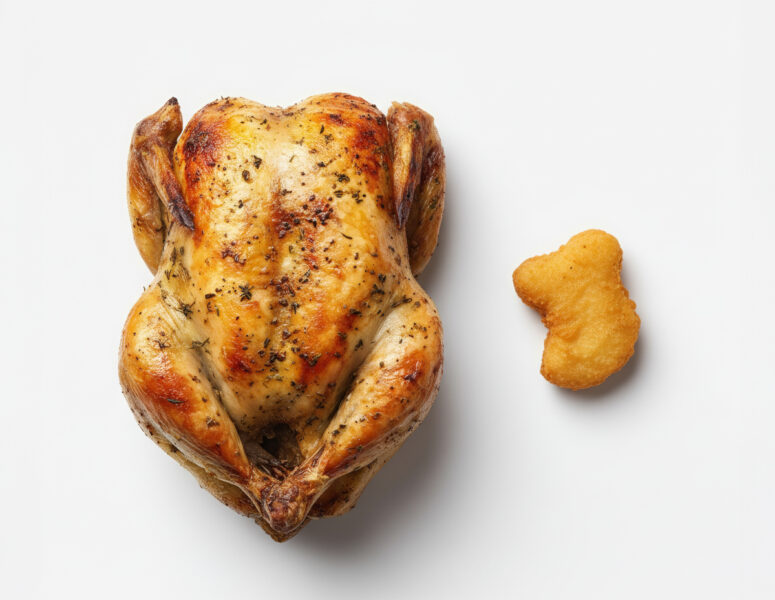
What about “ultra-processed”? Those foods are heavily altered from their natural state, usually with additives like emulsifiers, stabilizers, artificial flavors, colors, sweeteners, and preservatives. “Think of items like chips, candy, or pre-packaged snacks,” says Lauren.
When did processed foods become popular in America?
According to a study published in 2019, 71% of food in the American diet falls under the category “ultra-processed.” So why is American food so processed?
Processed and ultra-processed foods have steadily gained in popularity in America since the beginning of the 20th century, which saw the development of the first packaged hot dogs, mayonnaise, shortening, and cookies. Processed foods gained traction during and after both World Wars. Some convenience foods that prevail on store shelves today, like instant coffee and freeze-dried fruit, even came out of military research.
But the 1950s is when processed foods really took off like a rocket. Housewives embraced anything that would help lessen their domestic burden, and that meant a change in America’s food landscape from mostly scratch cooking to more and more convenience foods.
“The rise of TV dinners, quick convenience foods and fast-food chains like McDonald’s all led to more processed foods being consumed in and out of the house,” Registered Dietitian Nutritionist Maggie Michalczyk explains.
Is there room for processed food in a healthy diet?
Many of us are juggling more than ever these days, between work, family, home, and health. We may not be fifties housewives, but we still need shortcuts!
Luckily, as dietitian Maggie points out, “processed” doesn’t inherently mean “bad.”
“Just because it’s processed does not mean it doesn’t contain nutrition and can’t be included as part of a nutritious diet,” she explains.
Lauren agrees: “It’s less about avoiding categories entirely and more about balance, variety, and moderation,” she says. “A healthy diet should focus on what feels sustainable, accessible, and nourishing for the individual.”
And this is where ingredients matter. “It’s important to read ingredient labels and choose ones with shorter ingredient lists and options with no added nitrites, nitrates or preservatives when possible,” Maggie advises. “Another important thing to note is that the same type of food can be processed differently. For example not all deli meats are processed the same way.”
And that brings us to…
What does minimally processed mean?
At True Story Foods, we refer to our meats as “minimally processed.” So what does that mean?
We try to do as little as possible to take our products from raw ingredients to ready-to-eat. Instead of adding liquid smoke, our hot dogs and hams get a trip to the smoker. Instead of using preservatives or added nitrites and nitrates, we use natural ingredients like cherry powder and slow, old-world methods like salt curing. We do this so that our products taste delicious, but also so that we maintain the integrity of that high-quality raw material.
In fact, curing meats is a practice that originates in ancient times as a method of preservation. At True Story, our charcuterie products, such as our Heritage Breed Prosciutto and Genoa Salame, are made using the artisanal practices perfected in Italy with our American-raised, heritage breed pork.
Where to find unprocessed meat and healthy deli meat
When you’re looking for unprocessed or minimally processed meat, it’s important to research the ingredients and practices of any brand you’re buying from. And of course, always check the back of the pack! Watch out for preservatives, carrageenan, nitrites, anything vaguely labeled “flavorings,” and other ingredients you wouldn’t find in your own kitchen (more about that in our blog post about deli meat additives).
When purchasing fresh meat at the grocery store, look for claims such as No Antibiotics Ever, Organic, and crate-free, such as those you’ll find in our True Story Kurobuta pork. These claims ensure that your meat is high-quality, without antibiotics or additives, in addition to being humanely raised.
Taste the difference with True Story’s delicious and minimally processed meats! Read up on Our Farms and Our Practices, and see where to buy True Story Foods products at a retailer near you.